Whether you have been diagnosed with a femoral hernia, or are worried you might have one, our goal is to help put your mind at ease and get you on the path to recovery.
At Hernia Clinic Hampshire, have extensive experience repairing femoral hernias in patients of all ages and health conditions, and can even check for both femoral and inguinal hernias at the time of surgery.
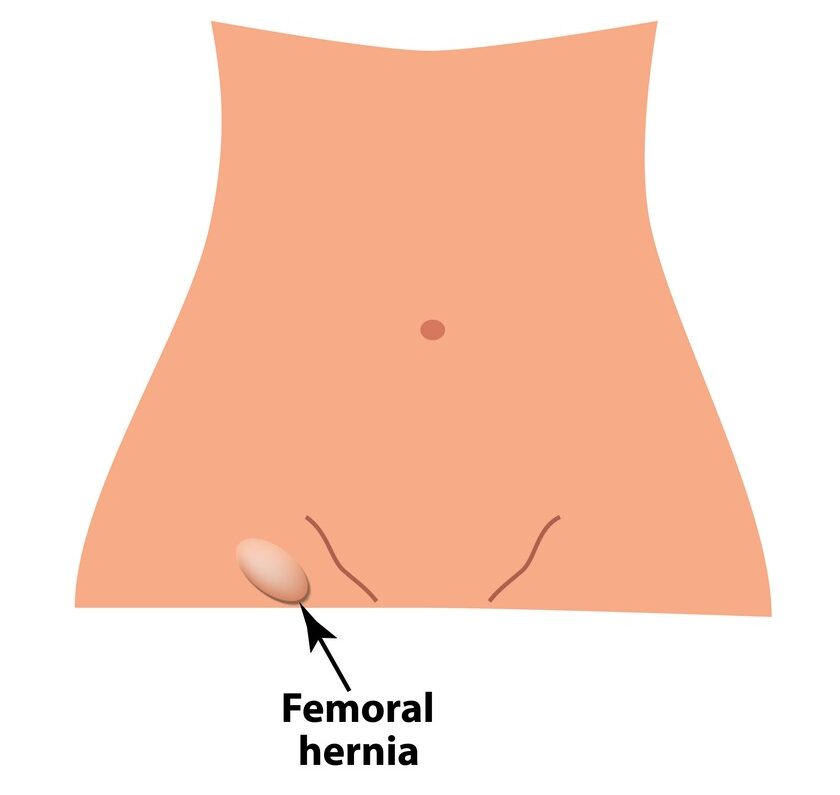
A femoral hernia is when tissue or bowel pokes through a defect in the abdominal wall and into the femoral canal.
The femoral canal is where the femoral vein enters the pelvis from the thigh. A space exists that allows the femoral vein to expand as blood return increases with exercise, walking, changes in hydration, etc. Due to gravity, femoral hernias can push through into this space. Our Consultant Surgeon is highly experienced at repairing femoral hernias in both men and women.
Femoral hernias are in a similar position to inguinal hernias (a more common type of groin hernia), but the natural weakness is in the femoral canal rather than the inguinal canal. They can be hard to differentiate, particularly in women.
Inguinal hernias are more common than femoral hernias in both men and women. However, femoral hernias, when they do occur, are more likely to affect women than men.
Aching, pulling, or discomfort that eases when the lump goes back in
Symptoms worsen with activity and feel more comfortable with rest
Sometimes only a lump without other symptoms is present
Our Consultant Surgeon will review your symptoms, carry out an examination, and provide a clear treatment plan tailored to you. Hernia support pants can be worn to help manage symptoms until you have surgery.
Femoral hernia repairs can be performed under local anaesthetic and sedation as an open surgery, and we typically recommend this approach for groin hernias as it is gentler on the body and lower risk than general anaesthetic.
Alternatively, we can repair femoral hernias using laparoscopic (keyhole) surgery under a general anaesthetic.
Recovery After Femoral Hernia Surgery
The majority of patients are able to return to light activity within a few days and are back to their usual activities by 4 weeks post-surgery.
We provide extensive post-surgery support and guidance on how to improve your recovery. Read about how our Hernia Recovery Programme helps to improve scar flexibility, long-term comfort in the wound, and reduce the risk of recurrence.
How Much Does Femoral Hernia Surgery Cost?
Our all-inclusive surgery packages start from £3,800. This includes the hospital fees, the Consultant Surgeon, the Consultant Anaesthetist, access to our Hernia Rehabilitation Exercises and post-surgery follow-up.
Private financing is available at each hospital. We also work with all medical insurance providers.
We use cookies to ensure that we give you the best experience on our website. If you continue to use this site we will assume that you are happy with it.