
If you’ve been diagnosed with an inguinal hernia, or think you might have one, you may be wondering what your next steps are. At Hernia Clinic Hampshire, we will put your mind at ease and show you that inguinal hernia treatment can be quick and straightforward.
We are experts at repairing groin hernias in a diverse range of patients, both male and female, young and old and with different health conditions and needs.
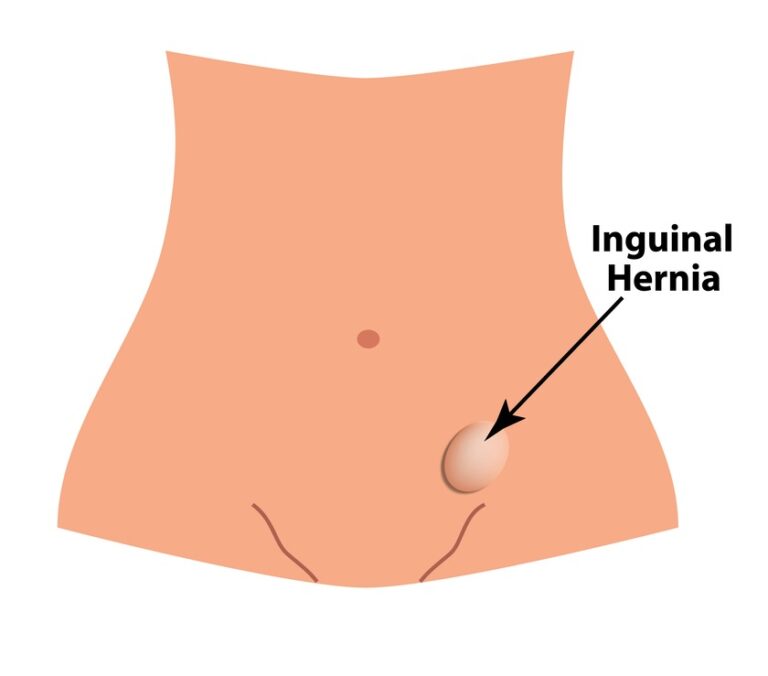
An inguinal hernia is a type of groin hernia. Inguinal hernias are the most common type of hernia. They affect more men than women by a factor of 9:1. These hernias form in a naturally weak area of the abdominal wall called the inguinal canal. The canal extends a few centimetres running from a hole in the inner muscle layers of the groin called the deep ring and exits in the superficial layer of the abdominal wall called the superficial ring.
Hernias can either work through the deep ring, widening it enough to allow tissue from inside the abdomen to get into the canal, or they create a split in the posterior muscles next to the deep ring, pushing abdominal tissue into the canal.
Our Consultant Surgeon will discuss your symptoms, may examine you, and will give you a clear treatment plan. If you are not ready to have surgery yet, hernia support pants can be worn to help keep the hernia reduced and manage symptoms
For groin hernia repairs, we often recommend an open surgery using local anaesthetic and sedation. Our skilled Consultant Surgeon has repaired over 2,000 hernias, and perfected this approach during Covid-19 as a lower-risk alternative to general anaesthetic with a simpler recovery. In fact, we are one of the only experts in the area using this approach.
We also offer laparoscopic (keyhole) surgery, but this approach has to be performed under general anaesthesia. We also repair bilateral inguinal hernias (both sides) or even a combination of a groin and another type of hernia at the same time.
Our highly experienced Consultant Surgeon will help you understand your options, and choose the best treatment for your health, preferences, and lifestyle (including work and sport).
Most patients return to light activity within days, build up gradually as comfort allows, and are back to their usual activities within 4 weeks. We will guide you through your recovery after surgery, and recommend using our Hernia Recovery Programme to improve your long-term wound comfort and reduce recurrence risk.
We offer competitively priced, all-inclusive groin hernia surgery packages starting from £4,100. This covers the Consultant Surgeon, Consultant Anaesthetist, hospital fees, our Hernia Rehabilitation Exercises, and post-surgery follow up.
Private financing can be arranged, and we also work with all medical insurance providers.