
At Hernia Clinic Hampshire, our Consultant Surgeon is highly experienced in diagnosing and repairing all different types of abdominal wall (ventral) hernias, including umbilical and paraumbilical hernias.
Whether you’ve been diagnosed with an umbilical/paraumbilical hernia, or are seeking advice on symptoms, we aim to give you peace of mind about your hernia and your options.
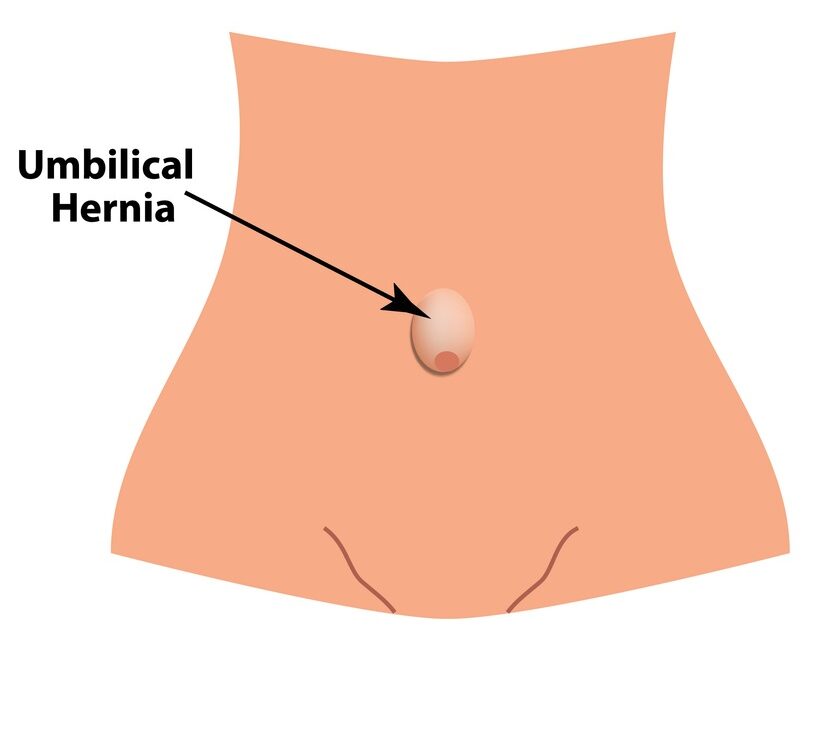
These hernias are also known as belly button hernias or umbilical hernias. These affect a weakness in your abdominal wall called the umbilicus, where the umbilical cord joins a growing foetus to the mum. While these hernias are common and can be present in anyone, obesity and pregnancy are common causes.
A true umbilical hernia is caused by an umbilical weakness that is present since birth, while a paraumbilical hernia is a new weakness that forms to the side of the umbilicus later in life.
Hernia repair techniques are similar for both, though sometimes older patients with true umbilical hernias may need additional tests (such as imaging and or bloods) before repair.
Our Consultant Surgeon will explain which you have and whether any additional tests are needed.
Many people with an umbilical/paraumbilical hernia notice:
We recommend an umbilical/paraumbilical hernia repair when symptoms start to interfere with your daily life and usual activities. You may not yet want or need surgery. In the meantime, and abdominal support belt can help manage your symptoms.
We recommend and offer paraumbilical hernia repairs under local anaesthetic and sedation. This innovative approach has been refined by our Consultant Surgeon over a number of years, and we are one of the only experts in Hampshire using this approach.
We choose this approach when possible because the recovery time is quicker, we can test your repair during your operation and patients are able to walk out of the hospital within hours after their hernia surgery.
Repair is straightforward but recurrence can be higher for this type of hernia than other types. Surgical repairs can only be attempted 2-3 times. To improve the chances of success, it is important to modify risks prior to the surgery, such as stopping smoking and achieving a BMI less than 33. Women often choose to complete their family before repairing these hernias, as pregnancy may bring them back.
We provide valuable post-surgery advice to help you improve recovery after surgery and lower the risks of recurrence and long-term pain. Most patients return to light activity within days and gradually build up to their normal activities within 4 weeks.
Under local anaesthetic and sedation, our all-inclusive hernia surgery packages start from £4,200. This package includes the hospital, Consultant Surgeon, and Consultant Anaesthetist fees, as well as a post-surgery follow up and access to our Hernia Rehabilitation Exercises.
The hospitals offer private financing, and we work with all medical insurance providers.